
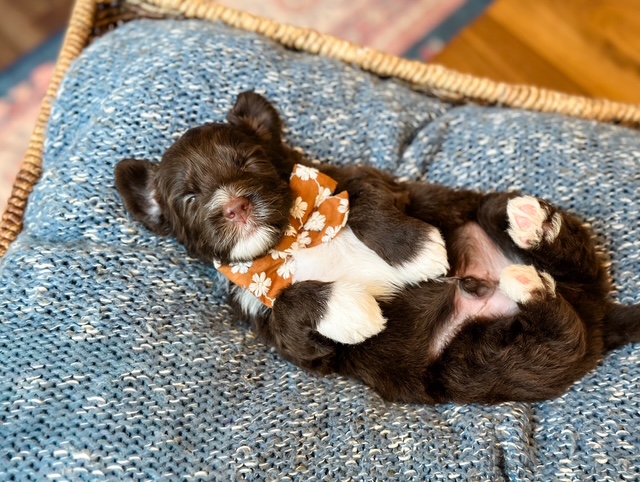
You did your homework. You know you want an Australian Labradoodle because they’re smart, perceptive, allergy friendly, and great with kids. You’ve looked at breeder websites and filled out applications. And then you notice that it costs $3,800. Possibly $4,500. More than once.
You might be shocked by the price at first. A friend of mine’s neighbor paid $800 for a “labradoodle” on Craigslist. They cost $1,200 at a pet store in the city. So why do good breeders charge two, three, or even four times as much?
The solution isn’t simply about the puppy you see. It’s about everything that happened before that puppy was born and all the breeder has promised to do once you get your dog home.
River Days Australian Labradoodle Pricing (Quick Answer)
If you’re reading this, you probably want to know our pricing first. Here it is:
| Program | Price | What’s Included |
| 8-Week Puppy | $4,100 | Complete health package, ENS/Puppy Culture, lifetime support, go-home supplies |
| Puppy Transition Camp | $650/week | 2-4 weeks of foundational training (ages 8-12 weeks) |
| Advanced Trained Puppy | Starting at $15,500 | Graduate at >20 weeks with AKC CGC-level preparation training |
Reservation process: $500 non-refundable deposit holds your spot on our waitlist. A second installment of $1,800 is due upon acceptance of the formal litter invitation, after the puppies are born. Remaining balance due by 6 weeks of age.
What Makes River Days Worth $4,100
Before we dive into industry pricing, let’s talk about what you’re specifically getting with a River Days puppy; because not all $4,100 puppies are created equal.
The River Days Difference
ALAA Platinum Paw + WALA All-Star — The highest certifications in Australian Labradoodle breeding
OFA CHIC Certified Parents — Every breeding dog has completed comprehensive health testing with results you can verify yourself on OFA.org
2-Year Minimum Breeding Age — We wait for final OFA hip clearances. Many breeders breed at 18 months, or even younger. We don’t.
Proven Therapy Dog Producer — We have certified therapy dogs in our lineage. We are a proven program.
Never Farmed Out — Your puppy is home-raised by our family. Not by our host families. Not in a kennel. Many breeders pay guardians (synonymous with “host families”) to whelp and/or raise their puppies. We don’t.
Daily Social Media Transparency — Watch your puppy grow from birth through our Instagram/Facebook updates. This is complementary to our formal weekly updates, pictures and educational materials.
Lifetime Support — You’re not just buying a puppy. You’re joining a family that will be there for questions, concerns, and milestones.
Learn more about our breeding standards →
What’s Included in Your $4,100
Health & Veterinary:
- First DHPP vaccination series
- Deworming at 2, 4, 6, weeks
- Microchipping
- Full veterinary examination
Early Development:
- Puppy Culture protocol (birth to 8 weeks)
- Early Neurological Stimulation (ENS)
- Early Scent Introduction (ESI)
- Sound desensitization
- Surface variety exposure
- Crate introduction
- Early outdoor potty training starting at 4 weeks
Go-Home Package:
- Snuggle Puppy with heartbeat and warming pack
- Comfort blanket with the scent of the mother and litter-mates
- Puppy collar—handmade, locally
- Leash—made in USA with lifetime warranty
- Puppy grooming video
Long-Term Value:
- 2-year genetic health guarantee
- 30 days free Trupanion pet insurance
- 25% Baxter & Bella training discount
- Ongoing support for puppy care inquiries
The Math: $4,100 ÷ 15 years = $273/year = $0.75/day for a dog bred to the highest standards
View our complete puppy package details →
The Real Cost of Australian Labradoodle Puppies in North Carolina (2026)
Now that you know what River Days has to offer, let’s look at it in the bigger picture of the market.
Current Industry Pricing
According to comprehensive industry data from multiple sources, including Dogster’s 2026 price analysis, Australian Labradoodle puppies from good breeders right now cost between $2,500 and $3,000. Most ethical, health-tested breeders charge between $3,500 and $4,500.
In North Carolina, prices from ALAA and WALA approved breeders are always in this range:
- Miniature Australian Labradoodles: $3,500–$4,500
- Medium Australian Labradoodles: $3,500–$4,500
- Trained puppy programs: $15,500+ (includes 12–20 weeks of professional training)
The $4,100 price for River Days is squarely in the middle of what respected breeders charge. This is because of the North Carolina market and the high value of our combination ALAA Platinum Paw + WALA All-Star certification, and OFA CHIC certifications for all parent dogs. We hold ourselves to a higher standard!
These rates are for Australian Labradoodles that have been bred for five generations or more to the criteria set by the original breeders in Australia. They are not first-generation crosses or mixed breeds from backyard breeders.
Why Are Australian Labradoodles More Expensive Than “Regular” Labradoodles?
This is the most common question that price-conscious customers ask, and it’s also one of the most crucial differences to know.
The Difference Between a Labradoodle and an Australian Labradoodle
A “Labradoodle” can mean almost anything:
- An F1 cross (Labrador + Poodle, first generation)
- An F1B cross (F1 Labradoodle bred back to Poodle)
- A backyard mix with unknown lineage
- An Australian Labradoodle
Only the Australian Labradoodle is a distinct, carefully developed breed with multi-generational lineage. The breed includes Labrador and Poodle specifically selected to produce:
- Coat types that are easy to predict and always the same (fleece or wool, low to no shedding)
- A great temperament for therapy and service work
- Reliable size forecasts in the small, medium, and standard ranges
- Selective breeding over many years has lowered inherited health problems.
Learn more about what makes the Australian Labradoodle unique compared to other doodle mixes.
Why this is important for prices: A breeder who makes multigenerational Australian Labradoodles isn’t just crossing two parent breeds and hoping for the best. They’re part of a genetic improvement program that has been going on for decades. They keep pedigree records and breed to exacting criteria. All of this takes a lot more time, money, and moral commitment.
According to Trusted Housesitters’ comprehensive cost analysis, Australian Labradoodles command premium prices specifically because of their “multi-generational lineage, extensive health testing, and hypoallergenic qualities.”
What You’re Actually Paying For: The Hidden Costs Behind Every Puppy
This is what your $4,100 investment in an Australian Labradoodle puppy from River Days (or any other good breeder) actually covers. Most of these things happen long before you meet your dog.
1. Comprehensive Health Testing on Parent Dogs
Good breeders don’t just breed any two dogs together. Before they are ever bred, every parent dog goes through a lot of health checks that are done on a regular basis. These checks include:
Required OFA (Orthopedic Foundation for Animals) Testing:
- Hip dysplasia evaluation (OFA or PennHIP)
- Elbow dysplasia screening
- Cardiac evaluation
- Eye examination (CERF certification)
- Patellar luxation assessment
Genetic Disease Panels (for example):
- Progressive Retinal Atrophy (PRA)
- Exercise-Induced Collapse (EIC)
- Degenerative Myelopathy (DM)
- Ichthyosis
- Von Willebrand’s Disease
- And 15+ potential additional breed-relevant genetic markers
Critical timing requirement: Ethical breeders don’t breed dogs until they are at least 2 years old, which is when OFA may give final hip certifications. This is not up for debate for ethical breeding, but it means years of care, training, and money spent before a single puppy is born.
Cost breakdown per breeding dog:
- OFA hip/elbow radiographs and evaluation: $500–$800
- PennHip evaluation: $700-$1200
- Genetic disease panel testing: $200–$400
- Annual eye exams (CERF): $100–$150
- Cardiac evaluation: $100–$200
- Total per breeding dog: $2,000–$3,000+
A breeder with 4–6 breeding dogs has invested $6,000–$18,000 in health testing alone before producing a single litter.
In contrast, backyard breeders and puppy mills don’t carry out much or any health screening on the parent dogs. That puppy on Craigslist for $800? It’s likely that the parents were never tested. The long-term expense of surgery for hip dysplasia, a genetic eye illness, or heart problems will be much higher than what you “saved” on the purchase price.
What this means for you: What this implies for you is that when you buy a puppy from a breeder with OFA CHIC certified parent dogs, you’re not just getting a puppy; you’re also getting genetic insurance. You are greatly lowering the chance of having health problems that cost a lot of money and break your heart that occur to dogs that are poorly bred.
2. Professional Certifications & Association Memberships ($500–$1,000/year)
Breeders who hold ALAA Platinum Paw or WALA All-Star designations — the highest certifications in Australian Labradoodle breeding — don’t receive these honors for free. These recognitions require:
- Annual membership dues
- Litter registration fees
- Adherence to strict breeding standards
- Regular audits and compliance verification
- Continuing education requirements
River Days Australian Labradoodles has both ALAA Platinum Paw and WALA All-Star status . These are certifications that show years of consistent quality, not just one-time successes.
Why this matters: If a breeder has these qualifications, you have some assurances that they are likely meeting the highest standards. Not only stating that, but the most reputable organizations in the breed have also validated it.
Early Development Programs: Puppy Culture, ENS, ESI ($200–$500 per litter in materials + hundreds of hours)
The greatest breeders don’t only keep puppies alive for 8 weeks; they use proven methods to mold their brain development, emotional resilience, and ability to learn:
Early Neurological Stimulation (ENS): Days 3–16, brief daily exercises that improve stress tolerance, cardiovascular performance, and lifelong adaptability
Early Scent Introduction (ESI): Days 3–16, exposure to novel scents that enhance scent discrimination and cognitive development
Puppy Culture: Comprehensive socialization curriculum from birth to 8 weeks, including:
- Age-appropriate environmental exposure
- Sound desensitization
- Surface variety (grass, tile, carpet, gravel, stairs)
- Gentle human handling from multiple people
- Early grooming acceptance training
- Crate introduction and positive confinement experiences
BABS (Badass Breeder) or Avidog programs: Additional structured protocols that go beyond basic care
What this costs breeders:
- Program materials and training: $200–$500
- Additional labor (2–4 hours daily per litter for 8 weeks): Uncompensated but essential
- Specialized equipment (sound machines, textured surfaces, grooming tools): $300–$600
What you get: A puppy who arrives at your home already equipped with the neural foundations for confidence, resilience, and learning. The difference between a Puppy Culture-raised dog and a kennel-raised dog is immediately visible in how they handle new situations, recover from stress, and respond to training.
4. Veterinary Care: Birth Through 8 Weeks ($800–$1,500 per litter)
Every litter from a responsible breeder receives comprehensive veterinary oversight:
- Pre-breeding health clearance for the dam
- Prenatal veterinary monitoring
- Whelping supervision (often emergency C-sections if needed: $1,500–$3,000)
- Neonatal puppy exams
- Deworming at 2, 4, and 6 weeks
- First vaccine series (typically DHPP at 6–8 weeks)
- Microchipping
- Individual health reports for each puppy
- Emergency vet care for any complications
Average veterinary cost per litter: $800–$1,500 for uncomplicated litters, significantly more if interventions are needed.
5. Nutrition: Premium Puppy Food & Supplements ($400–$800 per litter)
Quality breeders feed premium, protein-first puppy food from weaning (3–4 weeks) through go-home at 8 weeks. For a litter of 6–8 puppies, this represents:
- Dam’s increased nutritional needs during pregnancy and nursing
- Puppy weaning food (high-quality kibble softened, then transitioned to dry)
- Supplements for optimal development
- Cost: $400–$800 depending on litter size
Proper nutrition during the critical first 8 weeks directly impacts lifelong health, coat quality, and immune system development.
6. Facility Costs: In-Home Raising vs. Kennel (Ongoing overhead)
Reputable breeders raise puppies in-home; not in kennels, not in sheds, not in commercial facilities. This means:
- Dedicated puppy-raising space at the family home
- Climate control and cleaning supplies
- Puppy-proofing and sanitation
- Whelping boxes, playpens, and containment systems
- Toys, enrichment items, and rotational stimulation materials
What you’re NOT paying for with ethical breeders: Commercial kennels where dogs live in outdoor runs, get very little human interaction, and are treated like breeding material instead of family members.
7. Temperament Testing & Matching (specialized skill)
At 7 weeks, qualified breeders have an educated trainer do formal temperament tests on the puppies, like the Volhard Puppy Aptitude Test or something similar. It’s not about choosing the “best” puppy; it’s about finding the ideal family for each puppy’s personality.
A bold, high-energy puppy and a calm, sensitive puppy are not better or worse than each other. They just need different homes. Ethical breeders spend a lot of time getting to know each puppy’s personality and carefully putting them in the best place for them to grow.
What backyard breeders do: They take the first person who comes. The person who pays first gets to choose. No thought given to whether the puppy’s personality is a good fit for the family’s way of life, level of experience, or expectations.
8. Lifetime Breeder Support (Ongoing, indefinite commitment)
When you buy from a reputable breeder, you’re not just getting a puppy — you’re getting lifetime support. This includes:
- Guidance during the transition home
- Training troubleshooting throughout the dog’s life
- Health concern consultation
- Behavioral support
- Re-homing assistance if life circumstances change
River Days’ commitment to lifetime support means you always have an expert resource who knows your dog’s lineage, understands their genetic background, and is personally invested in their well-being.
What this costs breeders: Hours of unpaid consultation, advice, and support — often for 12–15 years post-purchase.
The True Cost Comparison: Reputable Breeder vs. Alternatives
Let’s look at what you’re really spending when you compare sources and what the long-term cost really looks like.
Option 1: Reputable ALAA/WALA Breeder ($3,500–$4,500)
What’s included with River Days: OFA CHIC certified parents (hip, elbow, eye, cardiac, genetic testing). Multigenerational pedigree with verified lineage. Puppy Culture/ENS/ESI early development. First vaccines, deworming, microchipping. Health guarantee (typically 2 years for genetic conditions). Temperament testing and thoughtful matching. Lifetime breeder support. Spay/neuter contract enforcement. In-home raising with daily socialization
Estimated lifetime vet costs: $8,000–$12,000 (routine care, assuming minimal health issues)
Total 12-year cost of ownership: ~$23,000–$28,000
Option 2: Backyard Breeder ($1,000–$1,500)
What’s typically NOT included: Limited or no health testing on parents. No verified pedigree or breed standards. Minimal early socialization (often raised in garage/shed). No structured early development programs. Limited or no health guarantee. First-come, first-served puppy selection (no temperament matching). No ongoing support after purchase
Estimated lifetime vet costs: $15,000–$25,000+ (higher due to genetic health issues)
Potential major expenses:
- Hip dysplasia surgery: $3,500–$7,000 per hip
- Progressive retinal atrophy treatment: $2,000–$5,000
- Cardiac issues: $1,000–$10,000+
- Behavioral training for under-socialized dogs: $1,500–$3,000
Total 12-year cost of ownership: ~$28,000–$42,000+
Research from A-Z Animals’ pricing analysis confirms that puppies from sources without comprehensive health testing cost owners significantly more over their lifetime due to preventable genetic conditions.
Option 3: Puppy Mill / Pet Store ($800–$1,200)
What you’re supporting: Dogs kept in commercial breeding facilities (often in substandard conditions). Zero health testing. No socialization or early development. Frequent genetic and behavioral problems. Often sold through third-party pet stores (markup without added value)
What this actually costs:
- Initial “bargain” price: $800–$1,200
- Immediate health issues (parasites, infections, parvo): $500–$2,000
- Long-term genetic conditions: $10,000–$20,000+
- Behavioral rehabilitation (fear, aggression, anxiety): $2,000–$5,000+
Total 12-year cost: $30,000–$50,000+
Ethical cost: Supporting an industry that treats dogs as profit-generating commodities rather than living beings.
According to Rover Pet Blog’s comprehensive breakdown, “avoiding puppy mills is critical, as these operations often prioritize profit over animal welfare” and result in dogs with “substandard genetics and underlying health issues which will cost more down the road.”
Option 4: Adoption/Rescue ($100–$500)
When this is the right choice:
- You’re open to an adult dog (1+ years old)
- You’re comfortable with unknown health/genetic history
- You have experience with potential behavioral challenges
- You want to provide a second chance to a dog in need
What’s typically included: Spay/neuter already completed. Current vaccinations. Microchip. Initial vet check
Estimated lifetime costs: $18,000–$30,000 (depending on dog’s age and health at adoption)
Important note: Australian Labradoodles in rescues are extremely rare. Most “labradoodles” in shelters are F1 or F1B mixes, not multigenerational Australian Labradoodles.
Why NC Breeders Price Competitively With National Averages
You might wonder why Australian Labradoodle pricing in North Carolina aligns so closely with national averages despite lower cost of living in some areas compared to coastal states.
Three reasons:
1. Health Testing Costs Are Fixed
OFA certifications, genetic panels, and veterinary specialists charge the same rates whether you’re in California or North Carolina. A PennHIP evaluation costs $700–$1200 regardless of location.
2. Breed Standards Are Universal
ALAA and WALA requirements don’t vary by state. A Platinum Paw breeder in NC maintains the same standards as one in Massachusetts or Oregon.
3. Demand Exceeds Supply
Reputable breeders nationwide struggle to meet demand. Most maintain waitlists. When demand consistently exceeds supply, prices stabilize at levels that reflect the true cost of ethical breeding.
What’s Included in Your River Days Puppy Package
When you buy an Australian Labradoodle from River Days, here’s exactly what your investment includes: ALAA Platinum Paw + WALA All-Star certified breeding program. OFA CHIC certified parents (all breeding dogs 2+ years old with final hip clearances). Time-tested puppy curriculum rooted in Puppy Culture + BABS early development from birth. Never farmed out; raised exclusively at our home by our family. Proven therapy dog producer; lineage with certified therapy dog offspring.
Comprehensive health package:
- First DHPP vaccination series
- Deworming at 2, 4, 6 weeks
- Microchipping
- Full veterinary examination
- Health certificate
Socialization foundation:
- Daily human handling from multiple people
- Sound desensitization
- Surface variety exposure
- Crate introduction
- Grooming acceptance training
Go-Home Package:
- Snuggle Puppy with heartbeat and warming pack
- Comfort blanket with the scent of the mother and litter-mates
- Puppy collar—handmade, locally
- Leash—made in USA with lifetime warranty
- Puppy grooming video
Long-term support:
- 2-year genetic health guarantee
- 30 days free Trupanion pet insurance
- 25% Baxter & Bella training discount
- Ongoing support for puppy care inquiries
View complete adoption process and pricing details
Special Investment: Trained Puppy Programs
For families who want to skip the most challenging phases of puppyhood, River Days offers trained puppy options:
Puppy Transition Camp ($650/week, 2–4 weeks)
Ages 8–12 weeks
Includes:
- Independent crate training (day and overnight)
- Early leash introduction
- Bite inhibition and jumping impulse control
- House training foundation
- Age-appropriate vaccinations (included)
Advanced Puppy Training Program (starting $15,500)
Graduates at >20 weeks
Includes everything in Transition Camp PLUS:
- Distraction-proofed commands
- Extended duration sit, down, place, stay
- Reliable recall in challenging environments
- Advanced loose-leash walking/heeling
- Public behavior and neutrality training
- Settle training within home environment
- Impulse control and emotional regulation
- Off-leash recall
- Comprehensive owner education
- 2-hour family handover session
- Complete core vaccination series
River Days’ trained puppies are ready to integrate seamlessly into family life from day one.
Red Flags: How to Spot Overpriced or Underpriced Puppies
Warning Signs of Overpricing (Not Justified by Value)
- Charges more based on gender and/or patterns (ethical breeders don’t differentiate)
- “Rare” color upcharges of $1,000+ without corresponding health testing or quality improvements
- No transparent health testing documentation despite premium pricing
- No professional affiliations (ALAA, WALA, etc.) despite claiming “premium” status
Red Flags of Suspiciously Low Pricing
If you see Australian Labradoodles advertised under $2,000, ask these questions:
- “Can you provide OFA CHIC numbers for both parents that I can verify on the OFA website?”
- “What early development protocols do you use?” (If the answer is blank stares or “we love them a lot,” walk away)
- “How old are the parent dogs?” (If under 2 years, final OFA hip clearances aren’t possible)
- “Where are the puppies raised?” (If the answer is “kennel” or “puppy barn,” that’s not in-home socialization)
- “What is your health guarantee?” (Anything less than 2 years for genetic conditions is substandard)
- “What professional organizations are you affiliated with?”
If the breeder can’t answer these questions confidently with documentation, the “bargain” price reflects what you’re NOT getting.
The Investment That Pays Emotional Dividends
Here’s what the numbers don’t capture:
- A dog that softly meets your kids instead of knocking them over because it learned how to manage its impulses from week 6.
- A dog that stays calm in the car because they were used to being in a cage and moving around as a puppy.
- A dog who bounces back rapidly from unpleasant situations because ENS made them better at handling stress
- A dog that is a registered therapy animal because it comes from a line of therapy dogs that have been demonstrated the work and was born with temperament as the primary consideration.
You can’t see these traits in a puppy that is only 8 weeks old. But you will have to deal with them every day for the next 12 to 15 years.
That’s what you’re paying for.
Is $4,100 Too Much for a Labradoodle? The Real Question to Ask
The question isn’t “Is $4,100 too much?”
The question is: “What am I getting for my investment and what will it cost me if I choose a cheaper alternative?”
When you break down the true cost:
$4,100 ÷ 12 years = $342/year = $0.94/day for a dog bred to the highest health and temperament standards
Compare that to:
- Hip dysplasia surgery: $7,000 (one-time, often both hips)
- Behavioral rehabilitation: $2,000–$5,000
- Chronic health management: $500–$1,500/year
The upfront cost of a carefully bred Australian Labradoodle isn’t so high all of a sudden. It’s smart with money and emotional stability.
As Popular Doodle states , “I’ve never met an owner who didn’t think they were worth every cent.”
Your River Days Puppy Payment Structure
Reservation Fee Structure
Step 1: Submit your application (no cost)
Step 2: Once approved, pay $500 non-refundable reservation deposit
Step 3: A second installment of $1,800 is due upon acceptance of the formal litter invitation, after the puppies are born.
Step 4: Remaining balance ($1,800) due by 6 weeks of puppy’s age
Why Comparing Price Alone Misses the Point
Before comparing prices, get clear on what matters most:
Am I looking for the lowest price — or the best value?
If your main goal is to spend as little as possible up front, a good Australian Labradoodle breeder might not be the best choice. But if you want the lowest lifetime cost and the best chance of getting a healthy, well-adjusted dog, the math plainly favors the upfront payment.
Do I have room in my budget for unexpected vet bills?
Dogs that come from bad breeders cost a lot more over their lives. You surely can’t afford a $1,200 dog with $10,000 in hip dysplasia operations if you can’t comfortably afford a $4,100 puppy.
Am I willing to invest time in training and socialization?
Even the best-bred dog has to maintain training, socialization, and structure. If you don’t have the time to train your puppy yourself, look into a program that already has a solid basis.
What am I hoping this dog will add to my life?
Breeding and early development are very important if you want a confident family pet, a peaceful therapy dog, or a hiking friend who is always well-trained. Alternatives might work if you can handle the unpredictability and are ready to deal with any temperament or health problems that come up.
Why River Days: The Value Behind the Investment
River Days Australian Labradoodles holds both ALAA Platinum Paw and WALA All-Star status; the highest distinctions in the breeding community. All of our breeding dogs hold OFA CHIC certifications. But what that means in practical terms:
Every breeding dog is OFA CHIC certified — you can verify health clearances yourself on the OFA website
2-year minimum age for all breeding dogs — no shortcuts, no exceptions
Never farmed out — every puppy is raised at our home by us
Proven therapy dog producer — verified certified therapy dogs in the lineage
Social media documentation — transparency in real-time about how puppies are raised
Lifetime support — not just a transaction; a relationship
You’re not only getting a dog when you pay for a River Days puppy. You’re working with a breeder in North Carolina who has spent years making the healthiest, most stable, and most consistently great Australian Labradoodles.
Final Thoughts: The True Price of “Cheap”
In 2026, the average reputable Australian Labradoodle breeder in North Carolina charges $3,500-$4500 for a puppy that represents:
- $5,000+ in parent dog health testing and training
- $1,500+ in veterinary care for the litter
- $800+ in premium nutrition
- $500+ in early development program materials
- Hundreds of hours of dedicated, skilled labor
- A lifetime commitment to support and integrity
When you see a “labradoodle” for $800, you’re not seeing a bargain. You’re seeing all the things that weren’t done; and you’ll pay for that.
The real question isn’t whether you can afford a $4,100 Australian Labradoodle from a reputable breeder.
It’s whether you can afford not to.
Ready to learn more about bringing home a River Days Australian Labradoodle Puppy?
Explore our adoption process and pricing | View available and upcoming puppies | Submit an application